

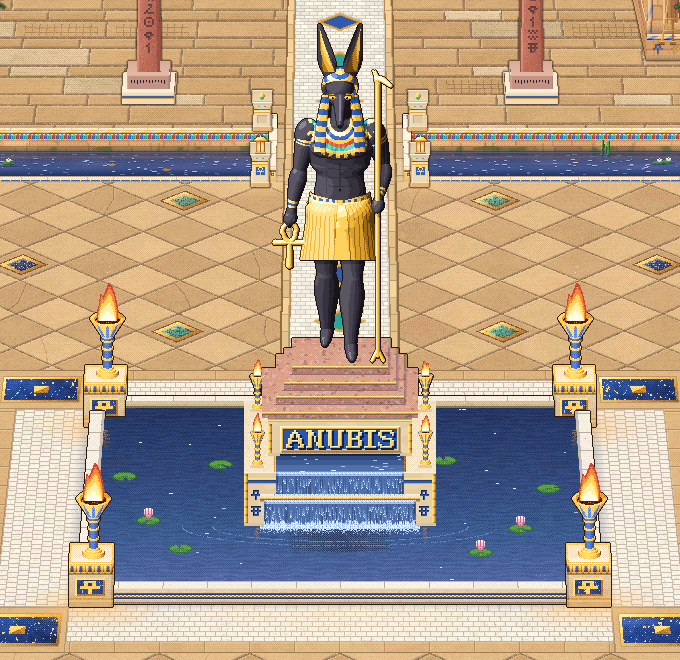
Anubis
The jackal god of embalming and cemeteries — and the guardian whose statue stands in the middle of our square.
Read more →Six gods of ancient Egypt give their names to our buildings. Here is who they really were — the myths, the museum pieces and the sources.
The jackal god of embalming and cemeteries — and the guardian whose statue stands in the middle of our square.
Read more →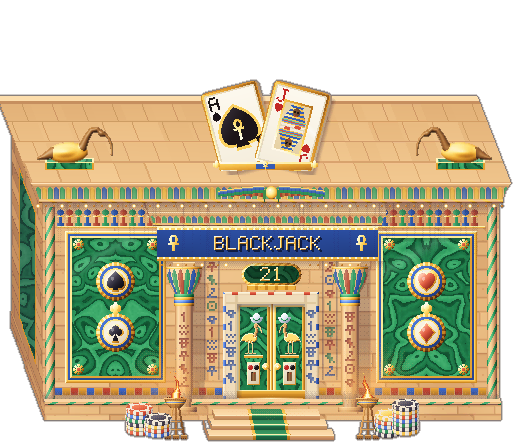
The ibis-headed scribe of the gods, lord of the moon and of reckoning — and the god of our blackjack hall.
Read more →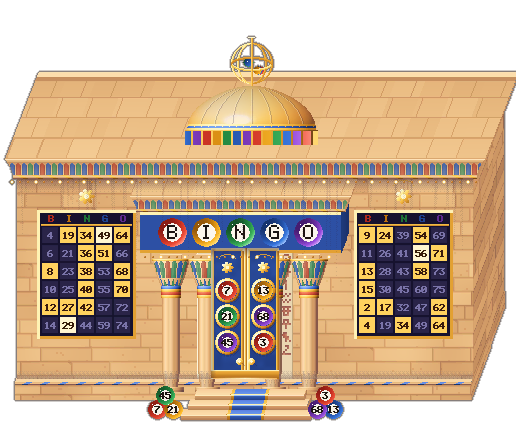
The goddess of writing and measuring who laid out temples and counted the years — and the patron of our bingo hall.
Read more →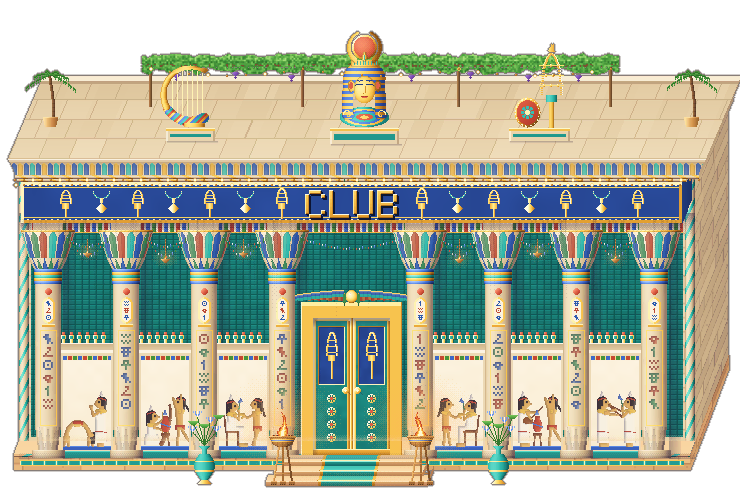
The goddess of love, music and dance, crowned with cow’s horns and the sun disc — and the lady of our club.
Read more →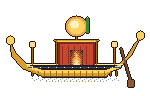
The sun god and creator who crossed the sky by boat — and the lord of our slot hall and the Ra Boat.
Read more →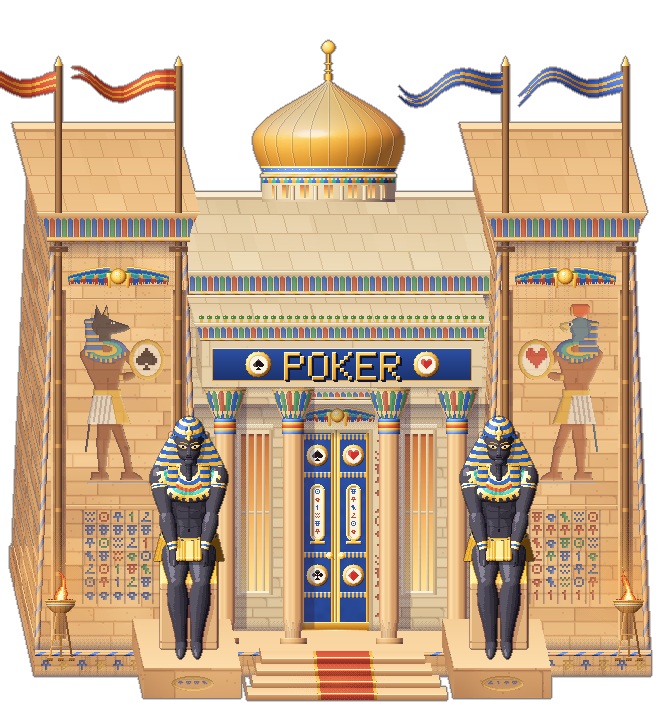
The falcon god of the sky and of kingship, owner of the famous eye — and the god on the pylon of our poker temple.
Read more →The Egyptians worshipped hundreds of gods over three thousand years and never wrote one sacred book that settled who was who. A god could merge with another — Amun and Ra became Amun-Ra — or gain a different family in the next town down the river. So almost every myth comes in versions, and each page says where they disagree.
Creation is a good example. The priests of Heliopolis taught that the sun god rose from the waters of chaos and made the first gods himself. In Hermopolis the world began with eight primeval gods: the town’s Egyptian name, Khmunu, means “City of the Eight”. In Memphis the creator was Ptah, who made everything by thought and word. That text survives on the Shabaka Stone in the British Museum, which someone later used as a millstone.
Anubis City is named after the guardian of the dead, so Anubis came first. Thoth, the god of reckoning, got the blackjack hall. Seshat, who wrote down numbers for the gods, got bingo. Hathor, the lady of music and dance, got the club, and Ra, the sun, got the slot machines and the golden boat at the quay. Horus, the falcon of kingship, looks down from the pylon of the temple where poker is played.
The buildings are our invention — no Egyptian temple ever had a roulette wheel on its front; the city guide shows them all. The gods, their emblems and their stories are real, and that is what these pages are about.
| God | Patron of | In Anubis City |
|---|---|---|
| Anubis | Embalming, cemeteries, the dead | The city’s name; Anubis the Guardian above the fountain; seven jackal heads on the harbour wall |
| Thoth | Writing, the moon, reckoning, scribes | Hall of Thoth — blackjack; the Book of Thoth slot |
| Seshat | Writing, measuring, records | Hall of Seshat — 75-ball bingo |
| Hathor | Love, music, dance, women and mothers | Feast of Hathor — the club with red beer and a dance circle |
| Ra | The sun, creation, kingship | Treasury of Ra — slots; the Ra Boat at the quay |
| Horus | The sky and the king | Relief on the Temple of Fortune; the Treasures of Horus slot |
We work from museum records (the British Museum, the Met, the Louvre), Britannica and two standard books by Egyptologists: Richard H. Wilkinson’s “The Complete Gods and Goddesses of Ancient Egypt” and Geraldine Pinch’s “Egyptian Mythology”. Each page lists its sources at the end. When a story is known only from a Greek writer rather than from Egyptian texts, we say so.
Open the game: you appear on the square in front of Anubis the Guardian, and every god on this page is a short walk away.
Play free